Why Denver car accident claims get complicated so quickly
Many people assume a car crash claim is mostly paperwork. In reality, serious cases turn on timing, detail, and leverage. Lawyers, clients, insurers, and medical providers are all reacting to the same event, but not with the same goals.
In the first week after a crash, important evidence can start to fade. A damaged vehicle gets repaired. A witness stops answering the phone. An intersection camera recording is overwritten. An injured driver tries to push through pain, delays treatment, and later has to explain why symptoms were not fully documented on day one. That sequence gives insurance companies openings they will gladly use.
A Denver car accident attorney steps into that gap by treating the case like a factual investigation and not just a complaint about pain. The attorney and legal team identify what happened, who is responsible, how the collision caused injury, and what the financial and personal losses are likely to be over time. That means gathering crash reports, photos, statements, treatment records, billing, employment information, and often expert analysis before the insurer defines the narrative for everyone else.
This is also where experience matters. Car accident cases can look similar from a distance, but the details change everything. One claim turns on skid marks and scene angles. Another depends on whether a client had prior neck pain before the crash. Another requires proving that lost wages are not temporary because the victim cannot return to the same physical work. A strong lawyer recognizes which facts will decide liability and which damages need the most support before negotiations begin.
Denver and Colorado crash facts every injury claim should take seriously
A strong page on car accident law should not float above the facts. The numbers below give real context for why Denver drivers, passengers, and families need reliable legal information after a collision.
That volume matters because it shows how often claims, injuries, and insurance disputes arise on local roads. Source: Anderson Hemmat Denver crash statistics.
Rear-end cases may look simple, but they still raise real questions about injuries, medical proof, and the force of impact. Source: Anderson Hemmat Denver crash statistics.
Fatality trends show why attorneys and families cannot treat dangerous driving as a minor inconvenience. Source: Colorado Department of Transportation.
Impairment creates devastating injury cases and often intensifies questions about punitive conduct, evidence, and accountability. Source: Colorado Department of Transportation winter DUI enforcement release.
Speeding increases stopping distance, force of impact, and the severity of injuries that shape compensation. Source: National Highway Traffic Safety Administration.
Why these facts matter in a claim: statistics do not prove fault in a specific case, but they do frame how common rear-end crashes, high-speed collisions, and impaired-driving events are in Colorado. Lawyers use that context to ask sharper questions, focus on the right evidence, and explain to clients why early case work matters.
What a Denver car accident attorney actually does for an injured client
The best attorneys do more than trade emails with insurance companies. They build a file that can survive scrutiny from adjusters, defense counsel, and if necessary, a jury.
At the beginning of a case, a lawyer helps a client stabilize the record. That starts with basic but essential information: police reports, scene photos, witness names, insurance details, and medical care. Then the work becomes more strategic. The attorney compares statements against vehicle damage, checks whether traffic controls and road conditions played a role, evaluates whether additional defendants may exist, and identifies what proof will be needed to support injury, causation, and damages.
Representation also creates distance between the injured person and the insurer. That is not just about convenience. Insurance companies know that a tired victim dealing with pain, work disruption, and family stress is easier to pressure into a recorded statement or low settlement. Once a lawyer is involved, the claim tends to move through a more disciplined process. Requests are filtered, deadlines are tracked, and the case is presented in a form that highlights both liability and recovery.
Good attorneys also help clients make practical choices. They explain why consistent treatment matters, why social posts can complicate a case, when to gather wage records, and how to think about settlement timing. In other words, they do not just react to what happened. They reduce avoidable mistakes that can undercut a claim later.
How fault, liability, and evidence shape recovery in Colorado cases
An injury claim does not succeed because the crash felt unfair. It succeeds because the evidence shows what happened and ties the accident to measurable harm.
Fault is argued through details
In many car accident cases, liability turns on everyday facts that become powerful when documented well. The timing of brake lights, the lane position of both drivers, road surface conditions, intersection controls, cell phone use, or the sequence of impact points can all matter. A victim may be certain the other driver caused the crash, but certainty is not enough if the file lacks usable proof.
That is why experienced attorneys look beyond the crash report alone. Police reports are important, but they are only one piece of information. Lawyers may compare the report to body shop images, event data, witness recollections, and treatment notes that describe how the body moved at impact. If the defense suggests a minor collision could not cause injury, the attorney needs records and often expert interpretation to explain why that argument falls apart in the real world.
Liability can involve more than one source
Some motor vehicle accidents involve straightforward negligence by one driver. Others are more layered. A commercial vehicle crash may raise questions about supervision, maintenance, or company policy. A multi-car collision may require sorting out chain reactions and overlapping fault. A roadway hazard may trigger investigation into notice and maintenance. The point is that a lawyer should not assume the first explanation is the whole explanation.
Evidence protects the value of the claim
Insurance companies often challenge three things: whether their driver caused the crash, whether the crash caused the injuries, and whether the requested compensation is too high. Good evidence answers all three. It shows liability through the facts, links injury through treatment and timing, and proves damages through records, bills, wage documents, and real-world loss.
Practical reality: if a client waits too long to gather photos, treatment notes, repair images, and witness information, the insurer gets a cleaner path to say the case is uncertain. Representation is often about closing those gaps before they become expensive.
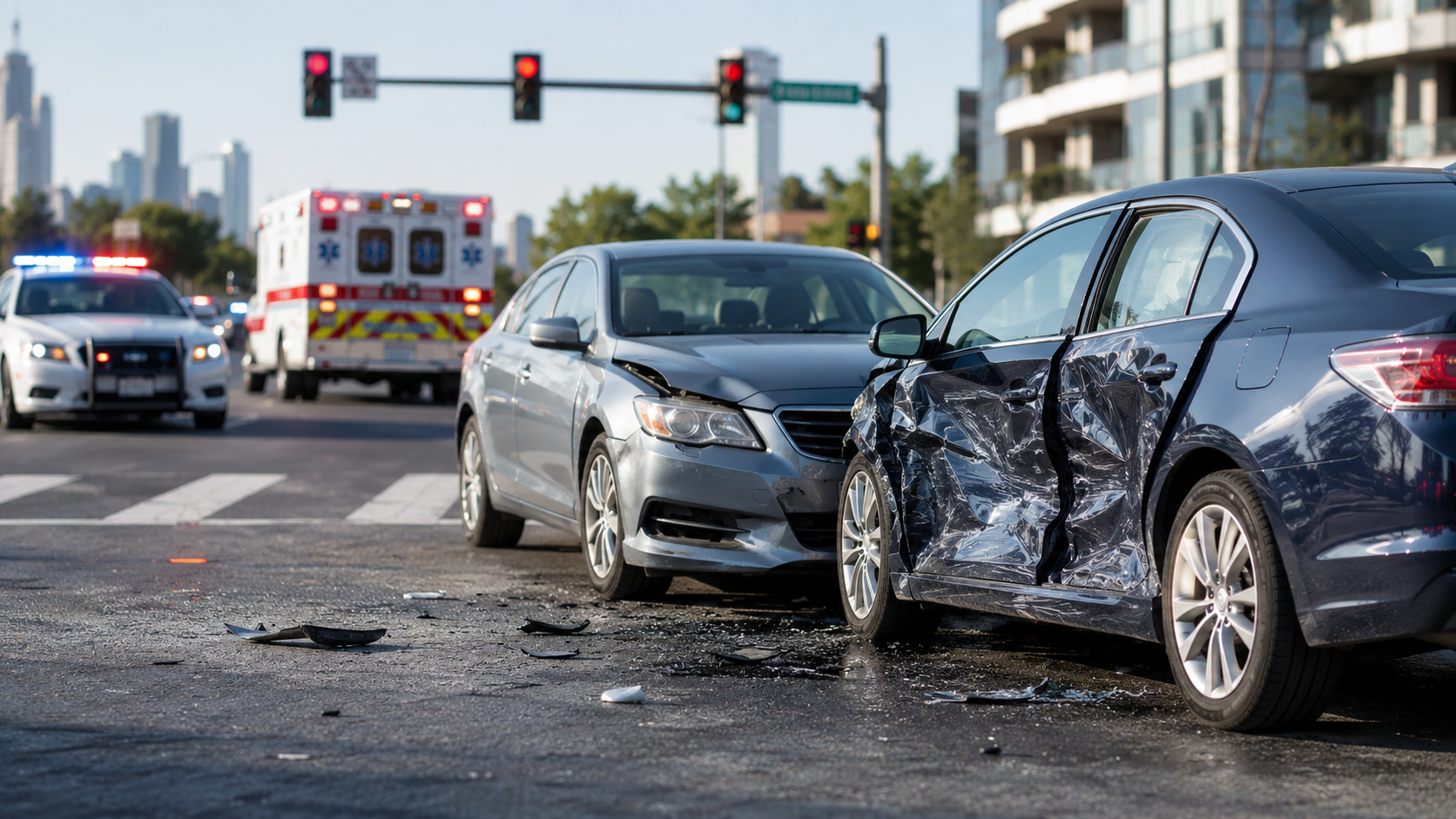
Common injuries after a Denver car crash and why documentation matters
Not every injury appears dramatic at the scene. Some of the most disruptive problems emerge over hours, days, or weeks, which is exactly why careful documentation is so important.
Rear-end collisions, side impacts, rollovers, and high-speed crashes can produce a wide range of injuries. Victims may experience head trauma, concussion symptoms, neck strain, shoulder injury, back pain, broken bones, knee damage, nerve symptoms, or internal injury. In more severe cases, there may be spinal trauma, permanent limitations, or long-term cognitive effects. Even when imaging is limited at first, the injured person may still face very real pain, sleep disruption, concentration problems, or an inability to perform normal work and family tasks.
From a legal perspective, the challenge is that pain alone does not document itself. Attorneys need medical information that shows complaint history, diagnosis, referrals, treatment consistency, and future recommendations. If a client misses appointments, underreports symptoms, or returns to strenuous activity too quickly, insurance companies often argue that the injuries were minor or unrelated. That argument may be weak, but weak arguments still cause damage when the file is incomplete.
Clients do not need to become legal experts. They do need to understand that accurate treatment records, specialist referrals, prescription history, imaging, and personal notes about daily limitations can strengthen both settlement discussions and trial presentation. Strong cases combine human story with disciplined documentation.
Insurance companies move quickly, so your response matters
Insurers are businesses with systems, scripts, and incentives. They may sound helpful at first, but their job is not the same as your recovery.
After a car accident, adjusters often make contact before the injured person has a complete medical picture. That timing is not accidental. Early calls can produce partial statements, casual comments about feeling fine, or narrow descriptions of the crash that become useful later when the case grows more serious. A victim who says, "I think I am okay," before a headache, neck injury, or back pain has fully developed may spend months dealing with that one sentence.
Insurance companies also tend to frame settlement around immediate bills while downplaying future consequences. Yet many serious injury cases involve ongoing treatment, time away from work, restrictions on lifting or driving, and emotional strain that is hard to measure in a single appointment note. Lawyers help slow the process down enough to evaluate the full claim instead of just the first invoice.
This is not about being difficult. It is about being complete. A settlement should reflect the real impact of the accident, including out-of-pocket expenses, lost wages, future care, pain, suffering, and the practical disruption that injured clients and their families absorb every day.
Compensation in Denver car accident cases is about total loss, not just today’s bills
People often underestimate their own damages because they focus on the obvious costs first. A good attorney works outward from the full impact of the accident.
Medical bills are the most visible category of damages, but they are only the beginning. A serious injury claim may include emergency treatment, follow-up appointments, physical therapy, imaging, medication, specialist care, future procedures, and ongoing pain management. Those numbers alone can be substantial, especially when recovery stretches over months.
Lost wages also matter, and not just in a simple hourly sense. Some victims miss shifts, overtime, bonuses, commissions, or contract opportunities. Others can return to work but not at the same pace, physical level, or schedule. In higher-impact cases, reduced earning capacity becomes a major issue, particularly when the client’s job depends on driving, lifting, standing, precision, or sustained concentration.
Then there are the deeply human losses. Pain, suffering, interrupted sleep, anxiety while driving, missed family activities, and the exhaustion of ongoing treatment do not arrive with neat invoices, but they are still real damages. In strong cases, attorneys present these losses in a grounded, credible way that connects the records to daily life. That is often what transforms a claim from a stack of documents into a story that carries weight in negotiation or trial.
The claim process from consultation to settlement or trial
The legal process feels less overwhelming when clients can see the sequence. Serious cases rarely resolve in one leap. They progress through stages, and each stage affects leverage.
Clients often ask how long this takes. The honest answer depends on the injuries, the treatment timeline, the clarity of liability, and the behavior of the insurer. Faster is not always better. When attorneys settle too soon, they may lock in a number before the full medical picture is known. Strong representation balances urgency with patience so the claim reflects the real scope of harm.
When to call a lawyer after motor vehicle accidents
Some people wait because they think calling an attorney means things have become extreme. In truth, early consultation often prevents avoidable problems.
You should strongly consider legal help when injuries require ongoing treatment, fault is disputed, multiple drivers are involved, the crash caused significant property damage, or the insurance company seems unusually eager to settle. A consultation also makes sense if you are unsure what your claim is worth, whether your records are complete, or how to respond to adjuster questions. Waiting can shrink options.
That said, calling a lawyer is not only for catastrophic cases. Many moderate injury claims become frustrating because the victim does not know how to organize the case. Even where the liability appears obvious, the real fight may center on medical causation, future care, or lost earning power. Attorneys help identify those pressure points early.
Simple rule: if the accident changed your health, your work, your routine, or your finances in a meaningful way, it is worth getting information from a lawyer before the insurer finishes writing your story for you.
Questions to ask before hiring a Denver car accident attorney
Not all law firms approach injury cases with the same depth. Asking focused questions can tell you a lot about whether the team is built for serious representation or fast turnover.
- How will you investigate liability if the insurance company disputes fault?
- What records and evidence do you want gathered right away?
- How do you evaluate future medical care and long-term damages?
- Will my case be prepared for trial if settlement talks stall?
- Who will be my main contact, and how often will I get updates?
- What issues do you see right now that could limit recovery if we do not address them early?
The goal is not to hear a sales pitch. It is to find out whether the attorney can explain the process clearly, spot risk, and connect legal strategy to the actual facts of your case. Experience should sound practical. It should show up in how the lawyer talks about evidence, treatment, damages, and negotiation pressure.
Recovery is both legal and personal, and your representation should reflect that
A strong Denver car accident lawyer does not treat clients like claim numbers. The best results usually come from disciplined legal work paired with respect for what recovery actually feels like.
After a crash, people are often navigating pain, appointments, transportation problems, work loss, and constant uncertainty. They are answering the same questions from doctors, employers, family members, and insurance representatives while trying to figure out whether life will get back to normal. That is a heavy burden. Legal representation should reduce it, not add to it.
The Advocates Colorado approach reflected on this page is simple: facts first, preparation over shortcuts, and case value grounded in the real human cost of injury. That means investigating how the accident happened, preserving evidence, documenting damages carefully, and building enough leverage to demand a serious response from insurance companies. Whether a case resolves in settlement or moves toward trial, the work should always aim at full, credible recovery.

Frequently asked questions about Denver car accident claims
How soon should I talk to a Denver car accident attorney after a crash?
Once emergency concerns are handled, it is smart to get legal information quickly. Early advice helps protect evidence, organize treatment records, and reduce the chance that an insurance company narrows the claim before the injuries are fully understood.
What if the insurance company says my injuries are minor?
That is common, especially when the crash looks modest on paper. Attorneys answer that claim with medical records, symptom timelines, treatment consistency, imaging, specialist opinions, and details about how the injury changed work and daily life.
Can I still recover compensation if fault is being disputed?
Possibly, yes. Many cases involve arguments about lane position, following distance, speed, distraction, or right of way. A lawyer can examine the evidence and push back against unsupported blame shifts that would otherwise reduce recovery.
Do I need a lawyer if the other driver’s insurer already accepted liability?
Even when liability is accepted, the main dispute often shifts to damages. Medical care, future treatment, lost wages, pain, suffering, and long-term effects still need to be developed carefully if you want compensation that reflects the true impact of the accident.